


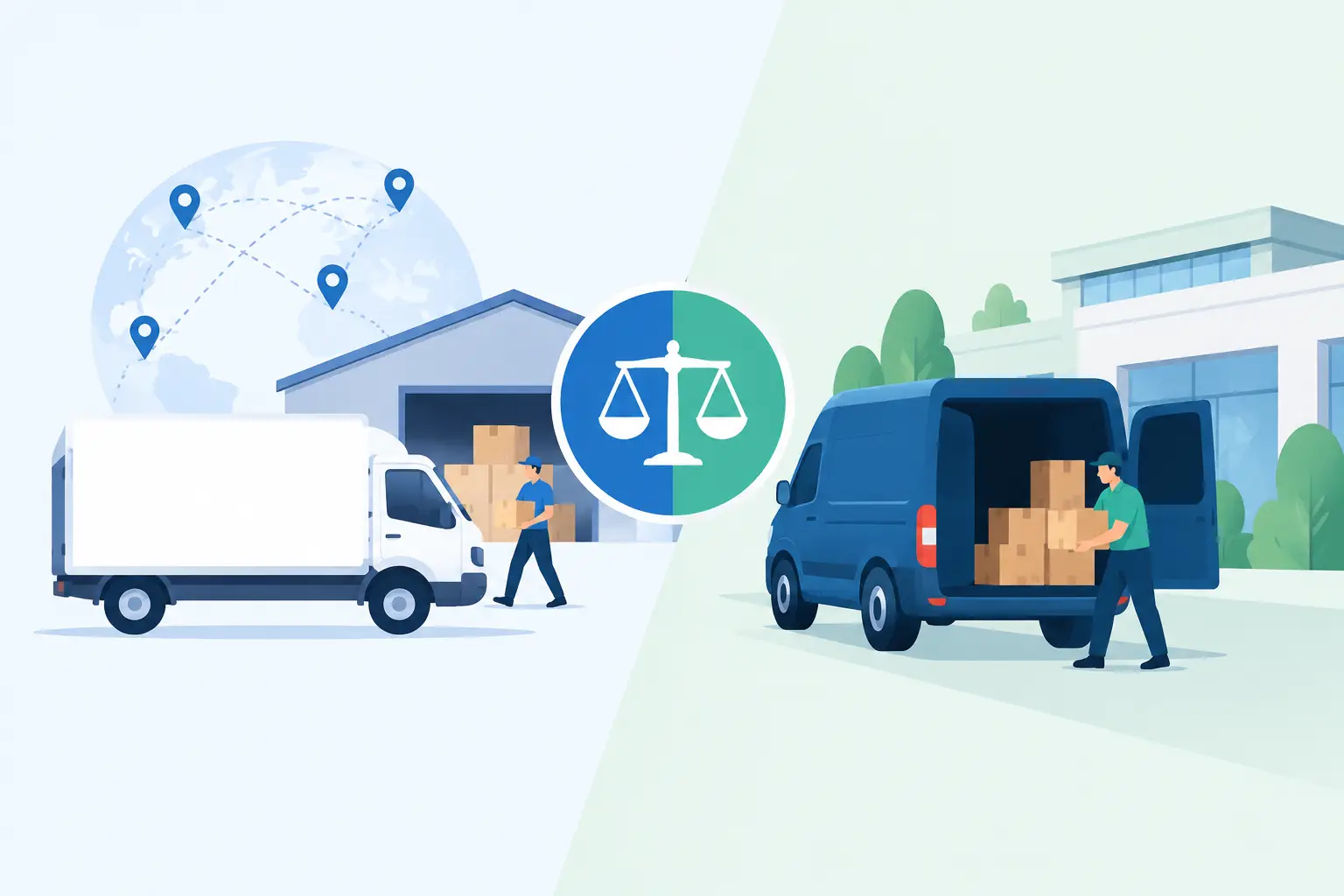
A customer needs an identity overhaul, a cloud migration, or help recovering from a security incident. Your sales team has the relationship. Your brand owns the promise. But your engineering bench is already booked, or the required specialist simply is not on staff. That is where white label delivery vs in house stops being an operating-model debate and becomes a customer-retention decision.
For MSPs, MSSPs, VARs, consultants, and systems integrators, neither model wins by default. Building internal capability can create control and margin over time. White-label delivery can put senior expertise on the job before the opportunity cools off or an outage becomes a bigger mess. The right choice depends on the work, the frequency of demand, the risk of failure, and what your customer expects from you.
White Label Delivery vs In House: The Real Difference
In-house delivery means your company recruits, trains, manages, and retains the engineers who scope and execute the work. You control their priorities, methods, customer exposure, and long-term development. That is a strong model when demand is predictable and the service is central to your strategy.
White-label delivery means a specialized engineering partner performs some or all of the work behind your brand. You retain the customer relationship, commercial ownership, and account strategy. The partner supplies technical depth, capacity, or specialized capabilities that would be expensive or slow to build internally.
The distinction is bigger than staffing. It affects how quickly you can sell a new offering, how much risk you carry during a high-stakes project, and whether one difficult engagement becomes a referral or a cautionary tale.
A true white-label model also requires discipline. Your partner has to respect brand boundaries, communication rules, documentation standards, and escalation paths. Sending an outside engineer to a customer without a clear delivery model is not white labeling. It is subcontracting with extra chances for confusion.
When In-House Delivery Is the Better Call
In-house delivery earns its place when a capability is repeatable, strategically differentiating, and consistently utilized. If you are managing endpoint operations, routine network changes, Microsoft 365 administration, or another service with steady monthly volume, internal teams can build familiarity with your customers and improve efficiency over time.
There is also a control advantage. Your engineers know your tools, ticketing standards, documentation habits, and account history. They can spot patterns that a project-based resource may not see immediately. For long-lived managed services, that context matters.
The catch is that headcount is not just a salary line. It includes recruiting time, onboarding, certifications, benefits, management overhead, bench time, training, turnover, and the hard cost of losing a key person at the wrong moment. A single senior cloud, identity, security, or operational technology engineer can be difficult to hire and even harder to replace.
In-house teams also face a capacity trap. When utilization is low, expensive specialists sit idle. When utilization is high, the same team becomes a bottleneck. Customers do not care that your engineers are booked through next month. They care that their migration date, audit deadline, or incident clock is still ticking.
Where White-Label Delivery Pulls Ahead
White-label delivery is strongest when the work is complex, urgent, specialized, or irregular. Think incident response, disaster recovery architecture, zero trust planning, identity modernization, cloud cost remediation, data-center exits, application performance issues, OT/IT security assessments, or a migration with too many dependencies to gamble on a junior team.
These engagements need more than a person with a relevant certification. They need engineers who have seen the failure modes: the hidden legacy dependency, the conditional-access policy that locks out executives, the recovery plan that works on paper but not under pressure, and the migration cutover that needs a real rollback path.
A capable white-label partner gives a channel firm a deeper bench without forcing it to carry every specialty on payroll. That lets your team say yes to opportunities that fit your customer strategy, even if they fall outside your day-to-day delivery catalog.
Speed matters here. A strong partner can help qualify an opportunity, identify unknowns, define a phased scope, and place the right technical lead on the work. That is not about selling magic. It is about reducing the time between customer need and competent action.
White labeling can also reduce delivery risk. The customer still sees your brand at the center, but the work is backed by engineers whose daily job is solving difficult infrastructure, cloud, security, migration, and resilience problems. That is a net under the wire when the stakes are high.
Cost Is More Than a Rate Card
The usual comparison starts with billable rates. Internal resources appear cheaper because their salary is already committed. External resources appear more expensive because each hour has a visible price. That comparison is incomplete.
The useful question is: what does it cost to deliver the outcome correctly, on time, and without damaging the account?
An internal engineer may be the economical choice for a well-defined, frequent task. But if the work requires weeks of research, delayed delivery, rework, or escalation after a failed cutover, the apparent savings disappear quickly. The same is true when senior internal staff get pulled off recurring revenue work to handle a one-time specialist project.
White-label delivery often creates a variable cost model. You pay for the expertise when the opportunity requires it. That can protect cash flow and allow you to preserve internal capacity for the services you deliver every day. It can also support healthier project margins when the scope is accurate and the value is clear.
Do not use a white-label partner simply to chase the lowest hourly rate. Cheap engineering becomes expensive when it produces incomplete documentation, weak handoffs, missed assumptions, or an unhappy customer. Drama-free outcomes are worth paying for.
Control, Brand Protection, and Customer Trust
The most common hesitation around white-label delivery is loss of control. It is a fair concern. Your customer trusted you, not an anonymous third party.
The answer is not to avoid outside expertise. The answer is to establish operating rules before delivery starts. Decide who owns customer communication, who attends technical meetings, how engineers identify themselves, who approves scope changes, how documentation is delivered, and what happens when an issue becomes urgent.
A good white-label partner works inside those rules. They do not freeload on your customer relationship, promote their own brand, or turn an engagement into a sales call. Their job is to make your firm look capable because your firm made the smart call to bring in the right expertise.
Ask potential partners direct questions. Can they work under your brand? Will they follow your project governance? Do they provide senior technical leadership rather than a rotating cast of resources? Can they document decisions, risks, and next steps in a form your operations team can support? How do they handle escalation at 2 a.m. when a recovery project is no longer theoretical?
If the answers are vague, keep looking.
Use a Blended Model for the Best Fit
For most channel firms, the practical answer is not white label or in-house. It is a deliberate blend.
Keep customer-facing service ownership, recurring operations, account knowledge, and core offerings close to your internal team. Use white-label specialists for advanced assessments, architecture, major implementations, surge capacity, incident response, and capabilities with uneven demand. Then bring the resulting documentation, runbooks, and operational knowledge back into your organization.
This approach turns external expertise into internal leverage rather than a permanent black box. Your team grows stronger, your customers get better outcomes, and you avoid building a payroll around every technical edge case that walks through the door.
Mavenspire applies this model as a Tier-4 engineering partner: senior technical muscle behind the partner brand, with delivery shaped around performance, resilience, innovation, security, and migration. The point is not to replace your team. It is to help your team take on the work that would otherwise be out of reach.
Make the Decision Before the Emergency
Do not wait for a ransomware event, failed migration, or impossible deadline to decide how your organization will extend its engineering capacity. Identify the services you can deliver confidently in-house, the skills you need occasionally, and the areas where failure carries an outsized customer or business risk.
Then build a delivery playbook for both. The firms that protect relationships best are not the ones that claim they can do everything. They are the ones that know when to bring in reinforcements, keep command of the customer experience, and get the job done right the first time.