


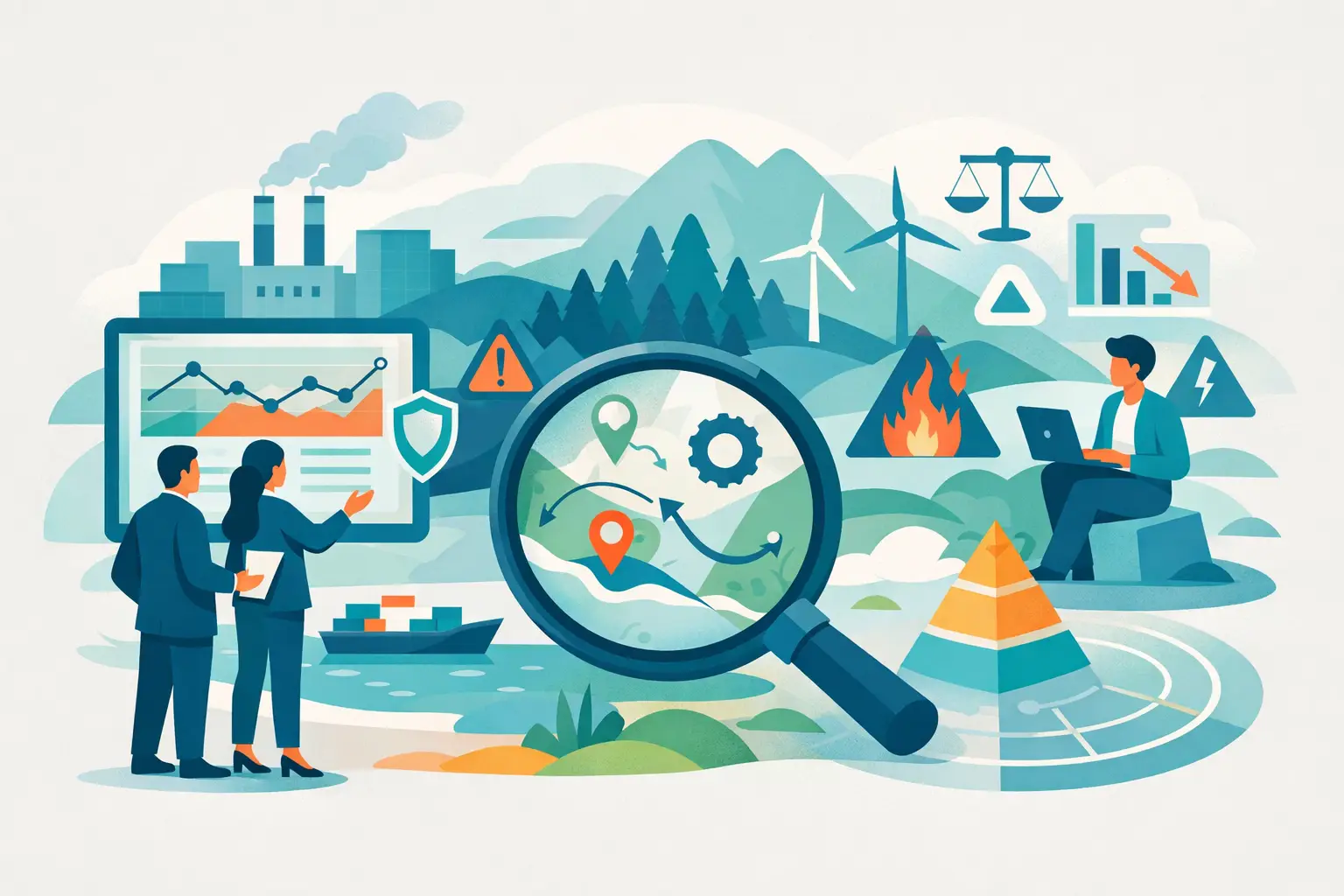
A complex environment risk assessment is not a spreadsheet exercise. For an MSP, MSSP, SI, or VAR, it is the work of finding what can break across a customer’s interconnected estate before a change, cyber event, outage, or failed recovery makes the problem visible for everyone.
That distinction matters. Most environments do not fail because someone missed an obvious critical server. They fail because a supposedly minor system depended on an overlooked identity service, a legacy integration, an unsupported network path, a cloud control plane, or a person who left six months ago. The technical failure is real. The business damage comes from the dependency nobody mapped and the recovery plan nobody tested.
For service providers, the stakes are higher because the risk is shared. An incomplete assessment can lead to a bad migration, an under-scoped security engagement, an SLA miss, or a customer relationship that becomes expensive to repair. The goal is not to produce a longer report. The goal is to make sound decisions, reduce surprise, and give the delivery team a path they can actually execute.
Why Familiar Risk Methods Fall Short
Traditional risk registers have their place, but they often assume the environment is stable enough to inventory. Many customer environments are not. They are a mix of on-premises infrastructure, SaaS applications, public cloud workloads, remote sites, operational technology, acquired businesses, aging line-of-business applications, and third parties with privileged access.
A point-in-time scan can identify missing patches or exposed services. It cannot, by itself, tell you whether a firewall rule is keeping a production process running, whether an application owner knows how authentication actually works, or whether backups can restore a usable business service within the required window.
The problem gets worse during change. A cloud migration, security modernization, merger, data-center exit, or AI initiative introduces new connections while old ones remain in place. Teams may call the project complete once workloads move or a tool is deployed. But if operating procedures, monitoring, identity controls, recovery runbooks, and ownership do not move with it, risk has only changed shape.
No excuses: risk assessment must account for how the environment operates, not just what it contains.
What a Complex Environment Risk Assessment Must Expose
A useful assessment starts with business services and works downward. Instead of asking only, “What assets do we have?” ask, “What must continue working for this customer to deliver, bill, protect data, and serve its own clients?” That shift reveals the technical and operational conditions behind each critical service.
Dependency Chains and Blast Radius
Every important application sits on a chain of dependencies. It may need DNS, Active Directory or another identity provider, certificates, storage, network segmentation, a cloud subscription, a vendor API, and an administrator with access to a specific console. Any weak link can stop the service.
The assessment should identify dependencies across infrastructure, applications, identity, data, and vendors. It should also test the reverse question: if this system fails or is compromised, what else is affected? That is the blast radius.
This is where assumptions get expensive. A migration team may see a virtual machine and treat it as portable. The application team may know it relies on a local service account, an undocumented database connection, and a static IP allow list at a third party. Both views are incomplete until they are connected.
Identity, Privilege, and Trust Boundaries
Identity is usually the control plane of a modern environment. A single privileged account, poorly governed service principal, inherited tenant role, or stale remote-access path can turn a contained issue into a broad compromise.
Assessment work should examine who has access, how that access is granted, where privileges are concentrated, and whether controls are consistent across on-premises, cloud, SaaS, and partner systems. It should also surface trust relationships that teams often forget to review, such as delegated administration, synchronization tools, VPN access, API tokens, and break-glass accounts.
The practical question is not whether multifactor authentication is enabled somewhere. It is whether a compromised identity can reach high-value systems, change security controls, access sensitive data, or prevent recovery.
Data Flow and Recovery Reality
Data sprawl creates risk that asset inventories often hide. Customer data may exist in production databases, file shares, endpoints, email, collaboration platforms, backup repositories, analytics tools, and unmanaged exports. If the organization cannot identify where sensitive or regulated data moves, it cannot confidently protect it or recover it.
Recovery needs the same scrutiny. Backup success does not prove recoverability. A complex environment risk assessment should validate backup coverage, retention, immutability, restoration sequencing, recovery point objectives, recovery time objectives, and the availability of the people and credentials required to perform the work.
A restore test can expose hard truths: backups may be inaccessible during an identity outage, application data may restore without configuration data, or the documented recovery order may not match production dependencies. These are not minor documentation gaps. They are business continuity failures waiting for an incident.
Operational Ownership and Change Control
Some of the highest risks are not technical defects. They are ownership defects. A critical integration may have no accountable owner. Monitoring may alert on infrastructure health while ignoring customer-facing transaction failure. A provider may manage the platform, while the customer owns the application, and neither team owns the handoff.
Assessment should establish who makes decisions, who approves changes, who responds after hours, and who can authorize recovery actions. It should review how changes are tested, communicated, monitored, and rolled back. A good architecture cannot compensate for an operating model built on ambiguity.
Build the Assessment on Evidence, Not Interviews Alone
Interviews are valuable, especially with engineers and application owners who understand the history behind a system. But interviews alone produce confident gaps. People describe the environment they believe exists, the one they last supported, or the one the documentation says should exist.
Evidence closes the gap. That means correlating discovery data with configurations, access records, architecture diagrams, tickets, monitoring alerts, backup results, vendor contracts, and change history. The right depth depends on the engagement. A pre-migration assessment needs detailed dependency and sequencing evidence. A security posture review may prioritize identity paths, exposure, detection, and recovery controls. A managed-services transition may focus heavily on ownership, tooling, and operational readiness.
At minimum, the assessment should produce four usable outputs:
- A service map that connects critical business functions to applications, infrastructure, identities, data stores, and third parties.
- A risk register that explains the failure scenario, affected service, likelihood, impact, current control, accountable owner, and recommended action.
- A prioritized remediation plan with sequencing, effort, prerequisites, and clear decisions for the customer.
- An operating baseline that defines monitoring, backup validation, access review, patching, change control, and incident responsibilities.
These outputs are more useful than a generic severity score because they connect risk to work. They tell the team what needs to happen next, who needs to do it, and what must happen first.
Score Decisions, Not Just Assets
A high-risk asset is not always the highest-priority fix. An unsupported server might be serious, but its priority depends on exposure, business criticality, compensating controls, recoverability, and the effort required to remediate it. Conversely, a modest configuration issue may deserve immediate attention if it gives an attacker a path to privileged identity or immutable backups.
Prioritization should consider impact, likelihood, detectability, recovery difficulty, and dependency concentration. It should also consider the risk created by remediation itself. Replacing a legacy component may reduce long-term exposure but create near-term outage risk if the dependency chain is not understood.
This is where experienced engineering judgment matters. The right move is sometimes to isolate and monitor a legacy system while building a migration plan. Sometimes it is to make an immediate access-control change. Sometimes the correct answer is to stop a project until the customer resolves a fundamental ownership or data-governance issue. Good assessors do not force every finding into the same remediation pattern.
Turn Findings Into an Executable Plan
An assessment that ends in a presentation is consulting theater. The real work begins when findings become a delivery plan with owners, dates, engineering tasks, and operational checkpoints.
Start with immediate risk reduction: exposed access paths, unmanaged privileged accounts, backup weaknesses, unsupported internet-facing systems, and missing detection coverage. Then address structural weaknesses such as network segmentation, identity architecture, application dependency cleanup, data classification, and recovery design. Finally, embed controls into operations so the organization does not recreate the same conditions after the project team leaves.
For IT service providers, this transition is where capacity and capability gaps become clear. Your team may understand the customer and own the relationship, but need specialized expertise for cloud identity, OT and IT security boundaries, disaster recovery design, or a complex migration. Bringing in the right engineering partner early can protect the outcome without displacing the provider.
Mavenspire’s SMARTaaS approach follows that practical sequence: diagnostics and discovery first, then the advisory, engineering, and operational support required to close the gaps. Doers, not just talkers, are what complex environments require.
Make the Next Change Safer
The best time to assess risk is before the next major change, not after the first avoidable outage. Start with the services your customer cannot afford to lose, trace the dependencies that keep them alive, test whether recovery works under real conditions, and assign ownership where ambiguity remains.
Complexity will not disappear. But when the environment is understood well enough to act with confidence, complexity stops being an excuse and becomes an engineering problem with a plan.