


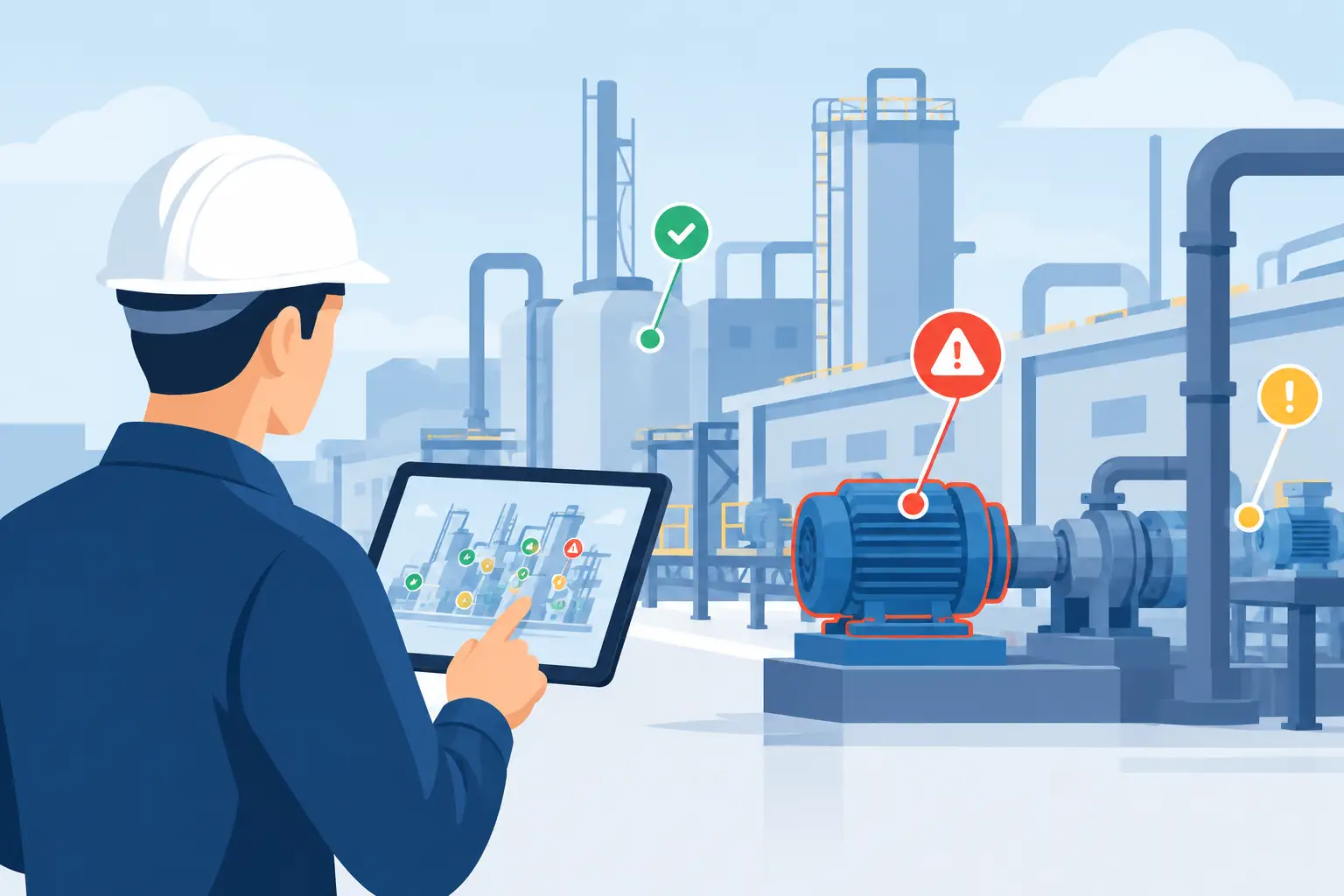
A packaging line stops because an aging engineering workstation fails. Nobody knew it was still connected to the production network, nobody owned its patching, and its backup image was last tested when flip phones were common. That is not a tooling problem. It is a visibility problem. Manufacturing asset discovery gives operations, IT, and security teams a credible answer to a basic question with high stakes: what is actually connected to the environment that makes product?
For MSPs, MSSPs, VARs, and systems integrators, the challenge goes beyond producing a device list. Your customer needs an accurate operational picture without interrupting production, alarming plant leadership, or burying engineers under a spreadsheet full of duplicate records. The work has to identify risk, establish ownership, and support decisions that improve uptime.
Why manufacturing environments are difficult to map
A conventional IT network is complicated enough. Manufacturing environments add controllers, human-machine interfaces, industrial PCs, sensors, robots, cameras, gateways, barcode scanners, programmable logic controllers, vendor appliances, and the occasional machine that arrived with a service contract but no useful documentation.
Many of these assets have long service lives. They may run legacy operating systems, use protocols that were never designed for hostile networks, or depend on a vendor remote-access method that nobody has reviewed in years. Some cannot be patched on a normal schedule because a change requires validation, a shutdown window, or both. A device can be operationally essential while being nearly invisible to the people charged with securing it.
Network diagrams are useful, but they are not evidence. They drift after expansions, emergency repairs, acquisitions, contractor work, and years of “we will document that later.” Configuration management databases have the same problem when their accuracy depends on manual updates. Manufacturing asset discovery replaces assumptions with observed data, then turns that data into a usable operating baseline.
Manufacturing asset discovery is more than a scan
A port scan may find a reachable IP address. It does not automatically tell a plant team whether the address belongs to a safety system, a historian, a spare controller, a remote vendor gateway, or a critical workstation running a machine-specific application. Treating OT discovery like an office-network scan can create unnecessary noise and, in the wrong circumstances, operational risk.
The right approach is layered and safety-aware. Passive monitoring can observe traffic and identify devices, communications, protocols, and relationships without actively probing sensitive equipment. Existing sources such as switch tables, firewall logs, DHCP records, virtualization platforms, endpoint tools, wireless controllers, and cloud management consoles fill in details that passive observation may miss. Carefully approved active checks can then address gaps where the asset type and production constraints allow it.
The goal is not to collect every possible field because a dashboard can display it. The goal is to create a defensible inventory that answers practical questions:
- Which assets are present, where are they connected, and who owns them?
- What role does each asset play in production, quality, safety, administration, or remote support?
- Which systems communicate across IT and OT boundaries?
- Which assets are unsupported, exposed, misconfigured, or dependent on a single point of failure?
- What can be changed safely, and what requires a maintenance window, vendor coordination, or compensating controls?
That last question separates discovery from theater. A report that labels a legacy controller “critical” but offers no safe next move is just expensive wallpaper.
Start with production outcomes, not a tool purchase
Before collecting data, define what the engagement must protect. Is the immediate concern ransomware moving from corporate IT into a plant? Is an acquisition creating unknown network dependencies? Is the business preparing to segment flat networks, migrate a historian, improve cyber insurance readiness, or retire unsupported systems?
Those objectives shape scope and priorities. A single facility may have multiple security zones, separate production cells, contractor networks, labs, warehouses, and remote sites. Discovery should account for each environment, but it should not treat every device as equally urgent. A label printer and a controller governing a bottling line deserve different levels of scrutiny.
This is where an experienced delivery partner earns its keep. Plant personnel understand how production really works. IT understands enterprise controls and support processes. Security teams understand exposure and adversary behavior. The discovery effort needs all three perspectives, plus the humility to ask the operator who knows why a particular workstation must remain online. Cyber defense takes a village. So does keeping a line running.
Build a usable asset record
An asset inventory becomes operationally valuable when it connects technical details to business context. At minimum, records should capture identity, network location, device type, operating system or firmware where available, observed communications, owner, support status, and a criticality rating.
For OT assets, add the production process or cell supported, vendor and support contact, maintenance constraints, approved change window, backup or recovery status, and known dependencies. A controller that appears healthy may rely on an unbacked-up engineering laptop. A segmented network may still have an overlooked jump host with broad access. Relationships matter as much as the individual device.
Normalization is the unglamorous part that determines whether the final inventory can be trusted. The same asset may appear under a hostname in one source, a MAC address in another, and a vendor serial number in a third. Duplicate records, stale addresses, and generic device labels should be resolved with evidence and local validation. Senior engineering judgment beats blind automation here.
Turn visibility into prioritized action
Discovery should produce a risk-ranked remediation plan, not a 400-page inventory that no one revisits. The strongest plans connect findings to realistic controls and operational owners.
An unsupported Windows workstation may need replacement, but replacement could take months because of application compatibility and production validation. In the meantime, compensating controls may include network segmentation, strict allowlisting, removal of unnecessary remote access, enhanced monitoring, backup verification, and documented recovery procedures. That is practical risk reduction, not wishful thinking.
Common action areas include tightening IT/OT segmentation, eliminating unknown remote-access paths, applying identity controls to privileged accounts, improving vulnerability and patch governance, validating backups, and documenting recovery runbooks. Some findings will call for engineering changes. Others will reveal a process problem: no assigned owner, no procurement standard, no vendor-access policy, or no lifecycle plan for equipment that outlived its original support contract.
Prioritization should weigh exploitability, exposure, production impact, safety implications, recovery difficulty, and the feasibility of a change. A high-severity software finding on an isolated device may be less urgent than a moderately risky remote-access appliance connected to several production zones. Context keeps teams from chasing CVSS scores while missing the path that actually matters.
Make discovery continuous without creating more work
Manufacturing environments change, even when they feel stable. New equipment arrives, service technicians connect laptops, IP addresses shift, and an emergency workaround quietly becomes permanent. A point-in-time assessment is valuable, but it ages fast.
Continuous or recurring discovery creates a baseline that can highlight new devices, changed communications, unauthorized remote-access tools, and assets that no longer fit their approved role. It also improves incident response. During an outage or suspected breach, teams can move faster when they know what device they are looking at, what it talks to, and whether it affects production.
The operating model should be proportionate. A large, multi-site manufacturer may justify dedicated OT visibility platforms, integrated workflows, and a formal governance cadence. A smaller facility may begin with a scoped assessment, a validated inventory, segmented network design, and quarterly review. It depends on operational complexity, regulatory pressure, threat exposure, and internal capacity. The point is to establish a process people can maintain, not a perfect system they abandon after the kickoff meeting.
Where channel partners can create real leverage
For service providers, manufacturing asset discovery is often the front door to higher-value work, but it should never be treated as a sales trick. Done well, it gives your customer a clear view of risk and creates a rational sequence for architecture, security improvement, migration, recovery, and managed operations.
It can also expose gaps in a provider’s own delivery capacity. OT protocols, plant-floor change control, industrial vendor coordination, and incident response are specialized disciplines. When the work exceeds the bench, a white-label engineering partner can provide the net under the wire: senior technical depth behind your brand, without handing the customer relationship to another vendor.
Start with the assets closest to production and the connections that should not exist. Validate what you find with the people who run the plant. Then make the next action clear enough that someone can own it Monday morning. Visibility is only valuable when it helps keep product moving and gives the business fewer surprises.