


Your client needs an identity redesign, a cloud recovery plan, or an incident response team by Monday. Your sales team can win the work, but your bench does not have the specialized engineering capacity to deliver it alone. That is where the question, “how does white labeling work,” stops being theoretical and becomes a practical channel-growth decision.
For MSPs, MSSPs, VARs, consultants, and systems integrators, white labeling is not a shortcut around accountability. Done well, it is a disciplined delivery model: a specialized technical partner performs agreed work behind the scenes while you remain the client-facing provider. Your brand, customer relationship, commercial terms, and service ownership stay intact. The delivery partner brings the engineering muscle.
The distinction matters. A white-label arrangement should make your organization more capable without making the customer feel passed around, surprised, or exposed to a vendor circus.
How does white labeling work in technology services?
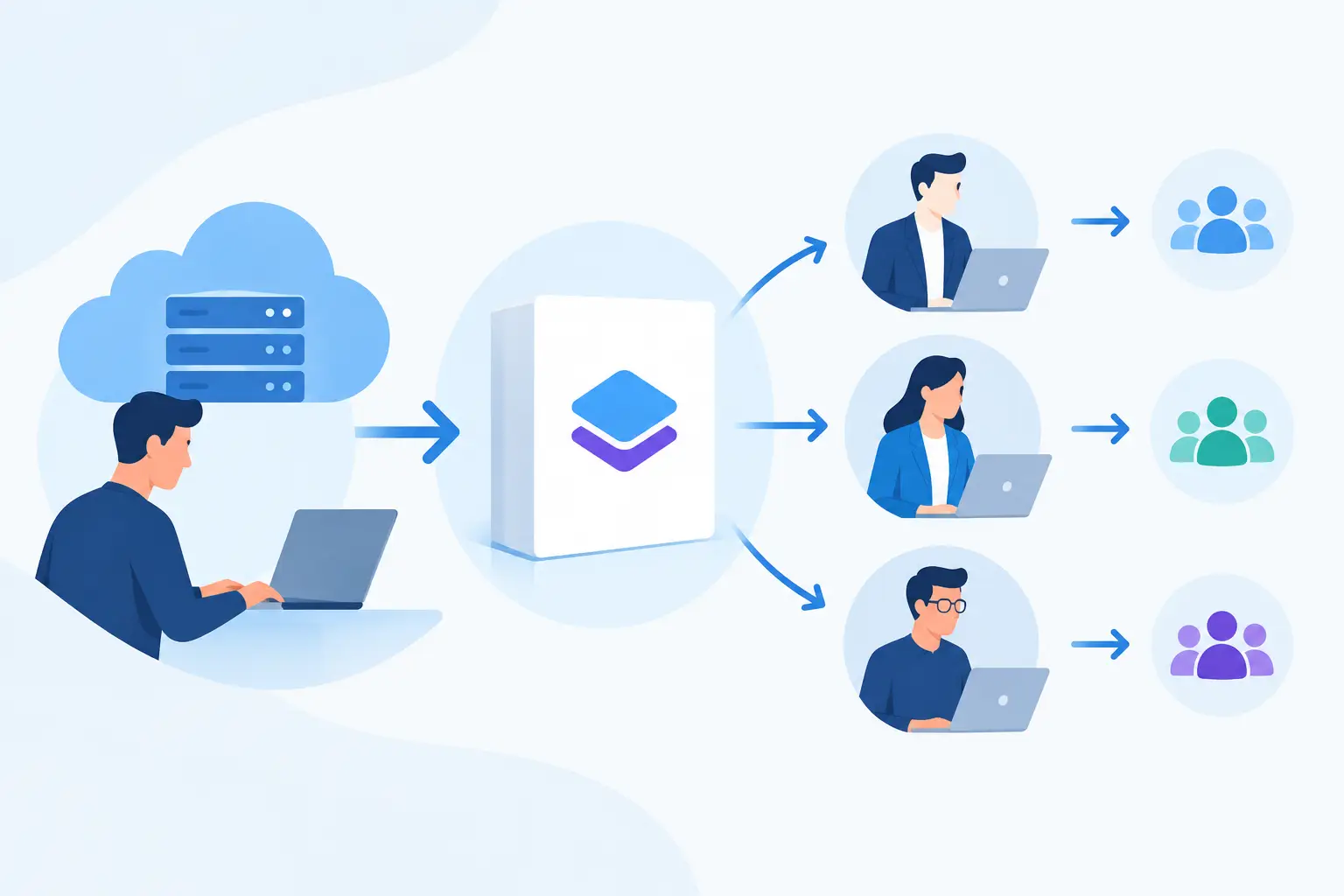
At its core, white labeling separates customer ownership from specialized execution. The channel partner owns the account, defines the offer, manages expectations, and presents deliverables under its brand. The white-label provider works as an extension of that partner’s team, delivering expertise that may be impractical to hire, train, and retain internally.
A typical engagement starts when a partner identifies a need outside its current capacity. Maybe a manufacturing client needs an OT security assessment. Maybe a regional healthcare provider has a messy identity environment and mounting compliance pressure. Maybe a cloud migration has stalled because the existing team can keep daily operations moving but cannot dedicate senior architects to the cutover plan.
The partner scopes the opportunity with the client, then engages the white-label provider under a partner agreement, statement of work, or similar commercial structure. The two teams clarify deliverables, responsibilities, timelines, escalation paths, and communication rules before engineering work begins. The partner then leads the client experience while the delivery team performs assessments, architecture, implementation, remediation, or ongoing operational support.
The client may never interact with the white-label team. In other cases, the client meets an engineer who uses the partner’s email address, meeting format, documentation templates, and approved messaging. Either model can work. What matters is that everyone understands the rules before a critical call or production change.
The white-label delivery model, step by step
White labeling works best when it follows an operating rhythm rather than a last-minute staffing scramble. Strong partners begin with qualification. They determine whether the work fits their client promise, whether the scope is clear enough to price responsibly, and whether outside expertise is truly required.
Next comes technical discovery. The delivery partner needs enough detail to identify hidden risk: environment diagrams, existing controls, dependencies, access constraints, business deadlines, recovery objectives, and known failure points. Senior engineers should challenge fuzzy assumptions here. “Migrate everything over a weekend” is not a plan. It is a future incident report waiting for a timestamp.
After discovery, the teams agree on a delivery plan. That plan should define what success looks like, who approves changes, how risks are communicated, and what happens when the environment does not behave as advertised. It should also establish the communication boundary. Will the provider join client meetings? Who sends status updates? Who answers a question that crosses commercial and technical lines? Ambiguity is where brand protection goes to die.
During execution, the white-label team delivers the work and the partner maintains account leadership. Good delivery partners provide evidence, not vague progress theater: assessment findings, architecture decisions, change records, test results, runbooks, acceptance criteria, and operational handoff materials. The partner translates that work into client outcomes, whether that means stronger resilience, lower security exposure, better application performance, or a migration completed without a business-stopping outage.
Finally, both teams close the loop. They confirm acceptance, address remaining risks, document next steps, and decide whether the engagement moves into managed support, a follow-on project, or periodic advisory. White labeling is often most valuable when it becomes repeatable. The first project proves capability. A reliable operating model creates margin and trust over time.
What each party owns
The cleanest arrangements are clear about ownership. The channel partner owns the customer relationship. That includes commercial terms, account strategy, client communications, invoicing, and the overall experience. If a client is unhappy, the partner cannot shrug and point backstage. Its name is on the work.
The white-label provider owns the technical obligations assigned in the scope. That includes delivering qualified people, following approved processes, protecting sensitive information, producing accurate technical artifacts, and escalating risks early. A good provider does not hide behind contract language while a project drifts. It flags the problem, explains the impact, and brings options.
Shared ownership covers the space between those two lines: scope control, change approval, service quality, and incident handling. This is why operating governance matters. A weekly status call may be enough for a contained assessment. A complex migration, security incident, or recovery event may require daily coordination, executive checkpoints, and a named escalation path.
White labeling is not the same as subcontracting
The terms overlap, but the difference has real consequences. Subcontracting simply means one company hires another to perform work. White labeling adds a deliberate brand and customer-experience layer. The provider is expected to work in a way that protects the partner’s identity and relationship.
That may include using partner-branded reports, following its documentation standards, joining meetings under agreed roles, and avoiding direct commercial conversations with the customer. It may also include non-solicitation provisions and careful access controls. The goal is not to pretend engineers are someone they are not. The goal is to keep delivery coherent and prevent clients from being pulled into a maze of unfamiliar vendors.
Some partners prefer transparent co-delivery, where a specialist is introduced as part of the broader delivery team. Others require a fully behind-the-scenes model. Neither is automatically better. A transparent model can build client confidence on highly specialized projects. A discreet model can preserve a consistent service experience. Choose based on the client’s expectations, contract requirements, and the complexity of the work.
Where white labeling delivers the most value
White labeling is especially useful when the customer need is high stakes, specialized, or temporary. Security incident response, identity modernization, cloud and infrastructure migration, disaster recovery design, OT/IT consultation, AI and automation planning, and complex architecture work all fit the pattern.
These are not always full-time hiring needs for an MSP or VAR. Yet the client may need senior expertise immediately. Building every specialty in-house can turn into expensive bench management, particularly when demand is uneven. A white-label partner gives you access to deeper capability while allowing your internal team to stay focused on the services it delivers best.
This model also protects speed. If a client has a ransomware event, degraded core application performance, or a looming compliance deadline, waiting months to recruit the right architect is not a serious answer. Experienced outside engineers can become a net under the wire, provided they are integrated into a disciplined process and not thrown into the environment blind.
The risks to manage before you sign
White labeling is powerful, but it is not magic. The largest risk is a gap between the promise sold and the capability delivered. If your sales team commits to a date, outcome, or technology scope without engineering validation, someone will eventually pay for that optimism.
Vetting matters. Look beyond logos and broad service lists. Ask who will actually perform the work, what seniority they bring, how the provider handles escalation, and how it documents technical decisions. Review its security practices, insurance coverage where appropriate, background-check approach, access management, confidentiality terms, and incident procedures. For regulated environments, confirm that the provider can support the relevant compliance obligations rather than merely saying it has “experience.”
You also need commercial clarity. Define payment timing, margin expectations, intellectual property rights, liability boundaries, change-control procedures, and what happens if the client pauses or expands the work. Cheap delivery that creates rework, client confusion, or a missed deadline is not cheap. It is margin erosion wearing a discount sticker.
Build white-label delivery around outcomes
The best white-label relationships are not built around a generic catalog of hours. They are built around outcomes and repeatable plays. For example, Mavenspire organizes complex delivery through PRISM: Performance, Resilience, Innovation, Security, and Migration. That framework gives partners a practical way to connect an engineering engagement to the business problem the customer is trying to solve.
A performance engagement should produce measurable improvements, not a pile of charts. A resilience project should prove recovery capability, not merely create a backup policy. A security assessment should identify priorities and drive remediation. A migration should have a validated cutover and rollback plan. When both partner and provider define success this way, the customer sees competence rather than a collection of disconnected tasks.
Start small if you need to. Use a white-label provider on a tightly scoped assessment or architecture review, then evaluate technical quality, communication discipline, and client response. The right relationship becomes part of your delivery engine: senior expertise available when the stakes rise, without sacrificing the trust you worked hard to earn.
You don’t need every specialist on payroll.
When a client opportunity outgrows your bench, bring us the situation. We’ll scope the senior engineering behind your brand. You stay in front of the client.
Need senior engineering behind your brand? We’re the Tier-4 white-label bench for MSPs and IT provider partners. You keep the client relationship. See how we work with partners.